
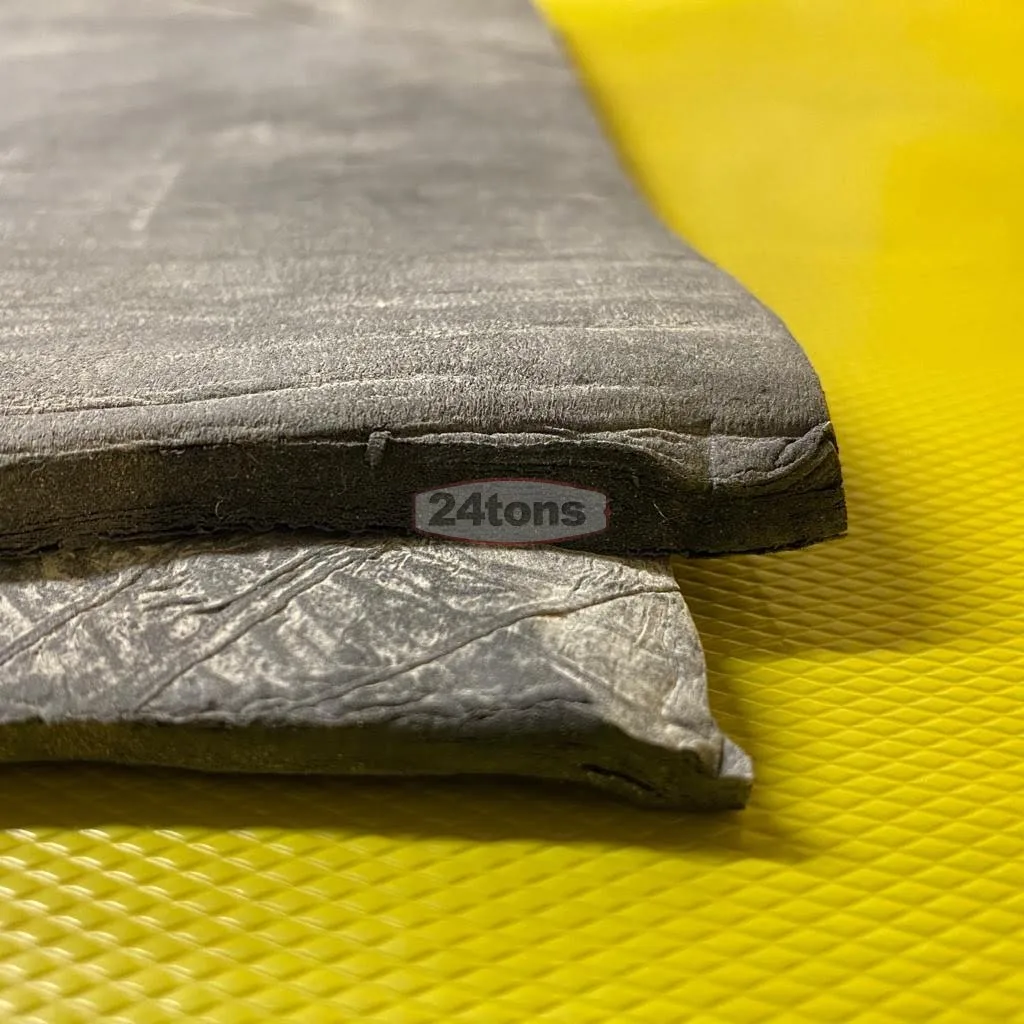
Reclaim Rubber vs. Virgin Polymer
Reclaimed rubber vs virgin rubber comes down to cost, blend level and processing. De-vulcanized reclaim is cured rubber converted back into an uncured masterbatch, so it mixes like a polymer and replaces part, or all, of the virgin polymer in a compound at lower cost.
- Typical blend level
- About 5–50% of the polymer
- Mixing
- One or two pass cycles
- Documentation
- COA and MSDS with every lot
- Capacity
- 500+ MT / month
Reclaim vs. virgin polymer at a glance
| De-vulcanized reclaim | Virgin polymer | |
|---|---|---|
| Cost | Low-cost replacement for virgin polymer | Higher cost |
| Use | Blend partner or stand-alone polymer | Base polymer |
| Mixing | One or two pass cycles on a Banbury or open mill, without sticking | Standard mixing |
| Already contains | Carbon black and oil (e.g. butyl 27 ± 5% carbon black; SBR 1502 33% carbon black, 14% process oil) | Polymer only |
| Documentation | Every lot certified; COA and MSDS | — |
Reclaim is not crumb rubber
Crumb rubber is still cured. Reclaim is fully de-vulcanized back into an uncured masterbatch that mixes on a Banbury or open mill like a polymer.
How much reclaim to blend
Blend levels vary by application and commonly range from about 5% to 50% of the polymer; some compounds use reclaim as the only polymer. Start with a trial batch against your own spec, then adjust.
Processing reclaim
- One or two pass cycles on a Banbury or open mill, without sticking.
- Blends with other elastomers, oils, carbon black, processing aids, accelerators and sulfur.
- Because reclaim already carries carbon black and oil, review filler and oil levels when you swap it in.
- Starting point: the SBR 1502 model compound (100 phr recycled rubber, 115.15 phr total) and the formulation cured at 150 °C. SBR 1502 reclaim →
Match the reclaim to your polymer
- Butyl reclaim rubber: Tire inner liners, tubes, retread and sidewall compounds; butyl adhesives.
- Whole tire reclaim (WTR): Solid and pneumatic tires; compression-molded and extruded goods.
- EPDM reclaim rubber: Extruded EPDM profiles, roofing membranes, conveyor belts, molded compounds, EPDM adhesives.
- SBR 1502 reclaim: Mechanical (molded) rubber goods, transit flooring, extrusion-grade and fabric- or cord-reinforced compounds, retread compounds.
- Natural reclaim rubber: Extrusion-grade and fabric- or cord-reinforced compounds; compounds that cut virgin NR cost.
Consistency and documentation
Each grade comes from a single, known cured scrap stream (inner tubes, weatherstrips, gasket scrap, truck tires). Every lot is certified and ships with a COA and MSDS.
- Quality
- ISO 9001:2008 and REACH compliant
Supply and lead time
Pickup from our warehouse in Columbus, OH, or door delivery of full or partial truckloads to the Northeast, Midwest, South, West Coast and Canada. Capacity is 500+ MT per month across all grades. A full truckload is 43,000 lb, lead time is 4–6 weeks (4 weeks for SBR 1502), and every lot is certified and ships with a COA and MSDS.
Have cured scrap of your own?
We run the same conversion for manufacturers through contract toll processing, and can return the masterbatch to your own mixing room.
Get a quote for reclaim rubber
Related
Reclaim vs. virgin rubber: common questions
Is reclaim rubber cheaper than virgin rubber?+
Yes. It is used as a low-cost replacement for virgin polymer, either as a blend partner or as the only polymer.
How much reclaim can replace virgin polymer?+
It varies by application, commonly from about 5% to 50% of the polymer. Run a trial batch against your spec.
Does reclaim process like virgin rubber?+
It mixes in one or two pass cycles on a Banbury or open mill without sticking, and blends with other elastomers, oils, carbon black, processing aids, accelerators and sulfur.
What is the difference between reclaim and crumb rubber?+
Crumb is still cured; reclaim is de-vulcanized into an uncured, mixable masterbatch.
How do I know each lot is consistent?+
Each grade comes from a single known scrap stream, and every lot is certified and ships with a COA and MSDS.
24tons picks up manufacturers' rubber process scrap, converts it into reusable raw material through vetted contract toll processors and reclaimers, and returns it to the original manufacturer (closing the loop) or distributes it into other qualified applications. One accountable partner, full confidentiality and traceability.